

Note: Question probes need a build newer than v0.4.8rc1. On v0.4.7 and earlier, the ask records the question, the receipt names no probe, and no check detail appears anywhere.
The six kinds
A probe value has the shapekind:target. The six kinds:
The
run, tag and pr kinds read GitHub with the gh CLI through the asking repository. A failed GitHub read records unread. It never closes the question. The node kind reads the backlog graph at the asking repository. The host kind resolves the name through DNS. The worker kind reads the session registry, the same verdict fno agents liveness prints.
File a question with a probe
This walkthrough holds a deploy worker until a migration node finishes. The question sits on the hold. The probe watches the migration. When the migration reads done, the probe closes the question, and the hold can open.1. Create the two nodes
The question needs a node to sit on, and the probe needs a node to watch:id value from each. This page names them <HOLD_NODE> and <MIGRATION_NODE>. Your ids differ.
2. Write the question file
<MIGRATION_NODE> with the id from step 1. The probe: line is frontmatter, beside class: and deadline:. Set the deadline: to a real time. fno inbox outstanding ask --question-file template prints this file with every section in place, and the intake refuses a question that misses one. The printed template carries no probe: line, so copy the key from this example into your own frontmatter.
3. Ask the question
D1 is the question’s display number. The second line names the probe, and it reads closes when it reads done. If the receipt reads probe: none - not machine-checkable instead, the intake did not read your key. Check that probe: sits above the --- line, and that the value has the kind:target shape.
With no live lead on the node, the question starts on your board at once.

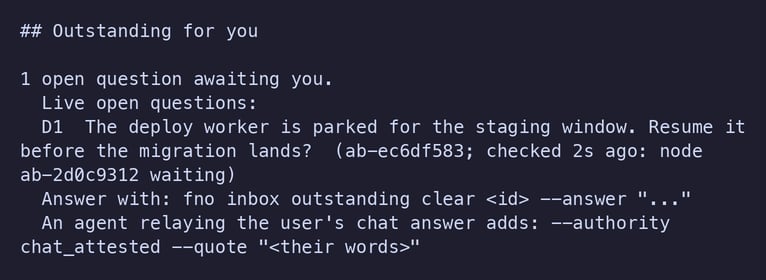
4. Read the check on the board
Within five minutes the daemon runs its first check. Run:waiting means the migration node is still open. checked 2s ago is the age of the last check.
5. Complete the action
Mark the migration done, with a note that says why:done on a node with no note, PR or artifact refuses with would close done with no record of why. The close writes nothing. Pass the note.
Within five minutes the next check reads done, and the daemon closes the question. The close record names the evidence in its reason:
fno inbox outstanding again. The question no longer lists. The hold on the deploy queue is gone, and nobody typed an answer. The question’s page moves to the done/ folder of your questions folder, and its record names the close. fno-agents state path questions prints where that folder sits.
What derivation finds without a key
A question with noprobe: key gets one derived from its text, so many questions carry a check without any setup. Derivation scans the question line and the subject line only. It never reads option or context text: a run named in an option is background, not the thing you wait on.
Three shapes derive:
- A GitHub Actions run URL, such as
https://github.com/fnodotdev/fno/actions/runs/42700851689. - The words
runand a run id of nine or more digits, such asrun 42700851689. - A
.ts.nethost name. The derivation drops the port, som2-mbp.example.ts.net:8443probesm2-mbp.example.ts.net.
probe: none, which turns derivation off.
The ask receipt always names what it stored. Treat probe: none - not machine-checkable; add probe: <kind>:<target> to the question file as your cue to add the key.
How a surface names the check
Every line that still carries the question names the machine’s last check:
Three surfaces carry the suffix. It ends a row on the board. It ends the Waiting on you lines an agent session prints. It ends a held row in a lead check-in.
Limits
The first check sets the baseline
The first reading is the baseline. A probe that reads done at its baseline says the action finished before you asked, so it never closes its question. The suffix readsdone before first check. If you asked after the action finished, close the question by hand with fno inbox outstanding clear.
A failed read never closes
A check that cannot read its target recordsunread, and the question stays open. The board names it: checked 3m ago: unread. The next check runs five minutes later. Fix the cause, such as a gh login on the asking machine, and let the checks continue.
The machine that asked runs the probe
The daemon on the asking machine probes the question. A copy on another machine waits for the asking machine.Next steps
- Answer from chat: answer the questions a probe cannot decide.
- Command page: read the board in a browser, and answer a question from its drawer.